圣誕節的由來英文版
Christmas is a Christian holiday that celebrates the birth of Jesus Christ. No one knows the exact date of Christ's birth, but most Christians observe Christmas on December 25. On this day, many go to church, where they take part in special religious services. During the Christmas season, they also exchange gifts and decorate their homes with holly, mistletoe, and Christmas trees. The word Christmas comes from Cristes maesse, an early English phrase that means Mass of Christ. The story of Christmas comes chiefly from the Gospels of Saint Luke and Saint Matthew in the New Testament.
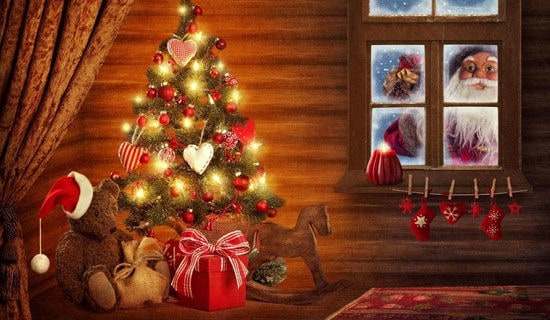
The history of Christmas dates back over 4000 years. Many of our Christmas traditions were celebrated centuries before the Christ child was born. The 12 days of Christmas, the bright fires, the yule log, the giving of gifts, carnivals(parades) with floats, carolers who sing while going from house to house, the holiday feasts, and the church processions can all be traced back to the early Mesopotamians.
Many of these traditions began with the Mesopotamian celebration of New Years. The Mesopotamians believed in many gods, and as their chief god-Marduk. Each year as winter arrived it was believed that Marduk would do battle with the monsters of chaos. To assist Marduk in his struggle the Mesopotamians held a festival for the New Year. This was Zagmuk, the New Year's festival that lasted for 12 days.
The Persians and the Babylonians celebrated a similar festival called the Sacaea. Part of that celebration included the exchanging of places, the slaves would become the masters and the masters were to obey. The ancient Greeks held a festival similar to that of the Zagmuk/Sacaea festivals to assist their god Kronos who would battle the god Zeus and his Titans.
The Roman's celebrated their god Saturn. Their festival was called Saturnalia which began the middle of December and ended January 1st. With cries of "Jo Saturnalia!" the celebration would include masquerades in the streets, big festive meals, visiting friends, and the exchange of good-luck gifts called Strenae (lucky fruits). The Romans decked their halls with garlands of laurel and green trees lit with candles. Again the masters and slaves would exchange places.
"Jo Saturnalia!" was a fun and festive time for the Romans, but the Christians thought it an abomination to honor the pagan god. The early Christians wanted to keep the birthday of their Christ child a solemn and religious holiday, not one of cheer and merriment as was the pagan Saturnalia.
Some legends claim that the Christian "Christmas" celebration was invented to compete against the pagan celebrations of December. The 25th was not only sacred to the Romans but also the Persians whose religion Mithraism was one of Christianity's main rivals at that time. The Church eventually was successful in taking the merriment, lights, and gifts from the Saturanilia festival and bringing them to the celebration of Christmas.
The exact day of the Christ child's birth has never been pinpointed. Traditions say that it has been celebrated since the year 98 AD. In 137 AD the Bishop of Rome ordered the birthday of the Christ Child celebrated as a solemn feast. In 350 AD another Bishop of Rome, Julius I, choose December 25th as the observance of Christmas.
The birth of Jesus had a story: In Nazareth, a city of Galilee. The virgin's name was Mary was betrothed to Joseph. Before they came together, she was found with child of the Holy Spirit. Joseph her husband was minded to put her away secretly. While he thought about these things, Gabriel, an angel of the Lord appeared to him in a dream and told him did not be afraid to take Mary as wife. And Mary will bring forth a Son, and he shall call his name, Jesus, for he will save his people from their sins.
Before Jesus births, Joseph and Mary came to Quirnius was governing Syria. So all went to be registered, everyone to his own city. Joseph also went up out of Galilee, out of the city of Nazareth, into Judea, to the city of David, which is called Bethlehem, because he was of the house and of the lineage of David, to be registered with Mary, his betrothed wife, who was with child. So it was that while they were there, the days were completed for her to be delivered. And she brought forth her firstborn Son, and wrapped him in swaddling cloths, and laid him in a manger, because there was no room for them in the inn.
And that, Christmas is the feast of the nativity of Jesus, is on 25th, December every year. But nobody knows the actual birthday of Jesus. And the Christmas has become popular when Christmas cards appeared in 1846 and the concept of a jolly Santa Claus was first made popular in nineteenth Century.
The custom of giving gifts to relatives and friends on a special day in winter probably began in ancient Rome and northern Europe. In these regions, people gave each other small presents as part of their year-end celebrations.
In the 1800's, two more Christmas customs became popular--decorating Christmas trees and sending Christmas cards to relatives and friends. Many well-known Christmas carols, including Silent Night" and Hark! The Herald Angels Sing," were composed during this period. In the United States and other countries, Santa Claus replaced Saint Nicholas as the symbol of gift giving.
The word Xmas is sometimes used instead of Christmas. This tradition began in the early Christian church. In Greek, X is the first letter of Christ's name. It was frequently used as a holy symbol.
“圣誕節”這個名稱是“基督彌撒”的縮寫。彌撒是教會的一種禮拜儀式。耶誕節是一個宗教節。我們把它當作耶穌的誕辰來慶祝,因而又名耶誕節。這一天,世界所有的基督教會都舉行特別的禮拜儀式。但是有很多圣誕節的歡慶活動和宗教并無半點關聯。交換禮物,寄圣誕卡,這都使圣誕節成為一個普天同慶的日子。
圣誕節是基督教世界最大的節日。4世紀初,1月6日是羅馬帝國東部各教會紀念耶穌降生和受洗的雙重節日、稱為“主顯節”Epiphany,亦稱“顯現節”即上帝通過耶穌向世人顯示自己。當時只有耶路撒冷的教會例外,那里只紀念耶穌的誕生而不紀念耶穌的受洗。
后來歷史學家們在羅馬基督徒習用的日歷中發現公元 354年12月25日頁內記錄著:“基督降生在猶大的伯利恒。”經過研究,一般認為12月25日作為圣誕節可能開始于公元336年的羅馬教會。12月25日原來是波斯太陽神(即光明之神)密特拉(Mithra)的誕辰,是一個異教徒節日,同時太陽神也是羅馬國教眾神之一。這一天又是羅馬歷書的冬至節,崇拜太陽神的異教徒都把這一天當作春天的希望,萬物復蘇的開始。可能由于這個原因,羅馬教會才選擇這一天作為圣誕節。這是教會初期力圖把異教徒的風俗習慣基督教化的措施之一。后來,雖然大多數教會都接受12月25日為圣誕節,但又因為各地教會使用的歷書不同,具體日期不能統一,于是就把12月24日到第二年的1月6日定為圣誕節節期(Christmas Tide),各地教會可以根據當地具體情況在這段節期之內慶祝圣誕節。
【圣誕節的由來英文版】相關文章:
愚人節的由來「英文版」08-06
感恩節的由來英文版11-25
愚人節的由來英文版08-13
圣誕節的由來08-03
2016感恩節的由來英文版11-22
萬圣節的由來英文版11-14
圣誕節的由來簡介07-13
圣誕節的由來故事02-02
關于圣誕節的由來01-02