北京故宮英文導(dǎo)游詞
中國(guó)建筑的'屋頂形式是豐富多彩的,在故宮建筑中,不同形式的屋頂就有10種以上。下面小編為大家分享北京故宮英文導(dǎo)游詞,歡迎大家參考借鑒。
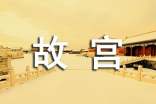
FORBIDDEN CITY(紫禁城)
(Infront of the meridian gate)
Ladies and Gentlemen:
I am pleased to serve as your guide today.
This is the palace museum; also know as thePurple Forbidden City. It is the largest and most well reserved imperialresidence in Chinatoday. Under Ming Emperor Yongle, construction began in 1406. It took 14yearsto build the Forbidden City. The first rulerwho actually lived here was Ming Emperor Zhudi. For five centuries thereafter,it continued to be the residence of 23 successive emperors until 1911 when QingEmperor Puyi was forced to abdicate the throne .In 1987, the United NationsEducational, Scientific and Cultural Organization recognized the Forbidden City was a world cultural legacy.
It is believed that the Palace Museum, orZi Jin Cheng (Purple Forbidden City), got its name from astronomy folklore, Theancient astronomers divided the constellations into groups and centered themaround the Ziwei Yuan(North Star). The constellation containing the North Starwas called the Constellation of Heavenly God and star itself was called thepurple palace. Because the emperor was supposedly the son of the heavenly gods,his central and dominant position would be further highlighted the use of theword purple in the name of his residence. In folklore, the term ”an easternpurple cloud is drifting” became a metaphor for auspicious events after apurple cloud was seen drifting eastward immediately before the arrival of anancient philosopher, LaoZi, to the Hanghu Pass. Here, purple isassociated with auspicious developments. The word jin (forbidden) isself-explanatory as the imperial palace was heavily guarded and off-explanatoryas the imperial palace was heavily guarded and off-limits to ordinary people.
The red and yellow used on the palace wallsand roofs are also symbolic. Red represents happiness, good fortune and wealth.Yellow is the color of the earth on the Loess Plateau, the original home of theChinese people. Yellow became an imperial color during the Tang dynasty, whenonly members of the royal family were allowed to wear it and use it in theirarchitecture.
The Forbidden Cityis rectangular in shape. It is 960 meters long from north to south and 750meter wide from east west. It has 9,900 rooms under a total roof area 150,000square meters .A 52-meter-wide-moat encircles a 9.9-meter—high wall whichencloses the complex. Octagon —shaped turrets rest on the four corners of thewall. There are four entrances into the city: the MeridianGate to the south, the Shenwu Gate(Gate of Military Prowess) to the north, andthe Xihua Gate(Gate of military Prowess) to the north, and the XihuaGate(Western Flowery Gate )to the west ,the Donghua (Eastern Flowery Gate) tothe east.
Manpower and materials throughout thecountry were used to build the Forbidden City.A total of 230,000 artisans and one million laborers were employed. Marble wasquarried from fangshan Country Mount Pan in JixianCounty in Hebei Province.Granite was quarried in Quyang County in Hebei Province. Paving blockswere fired in kilns in Suzhou in southern China.Bricks and scarlet pigmentation used on the palatial walls came from linqing inShandong Province .Timber was cut ,processed andhauled from the northwestern and southern regions.
The structure in front of us is theMeridian Gate. It is the main entrance to the forbidden City. It is also knowsas Wufenglou (Five-Phoenix Tower). Ming emperorsheld lavish banquets here on the 15th day of the first month of the Chineselunar year in hornor of their counties .They also used this place for punishingofficials by flogging them with sticks.
Qing emperors used this building toannounce the beginning of the new year. Qing Emperor Qianglong changed theoriginal name of this announcement ceremony from ban li(announcement ofcalendar)to ban shou(announcement of new moon )to avoid coincidentalassociation with another Emperor` s name, Hongli, which was considered a tabooat that time. Qing Dynasty emperors also used this place to hold audience andfor other important ceremonies. For example, when the imperial army returnedvictoriously from the battlefield ,it was here that the Emperor presided overthe ceremony to accept prisoners of war.
(Afterentering the Meridian Gate and standing in front of the Five Marble Bridges onGolden Water River) now we are inside the ForbiddenCity. Before we start our tour, I would like to briefly introduce you to thearchitectural patterns before us .To complete this solemn, magnificent andpalatial complex, a variety of buildings were arranged on a north-south axis,and 8-kilometer-long invisible line that has become an inseparable part of theCity of Beijing. The Forbidden City coversroughly one –third of this central axis. Most of the important building in the Forbidden City were arranged along this line. The designand arrangement of the palaces reflect the solemn dignity of the royal courtand rigidly –stratified feudal system.
The Forbidden Cityis divided into an outer and an inner count. We are now standing on thesouthernmost part of the outer count. In front of us lies the Gate of supremeHarmony .The gate is guarded by a pair of bronze lions ,symbolizing imperialpower and dignity. The lions were the most exquisite and biggest of its kind.The one on the east playing with a ball is a male, and ball is said torepresent state unity. The other one is a female. Underneath one of its foreclaws is a cub that is considered to be a symbol of perpetual imperialsuccession. The winding brook before us is the Golden Water River. It functions bothas decoration and fire control .The five bridges spanning the river representthe five virtues preached by Confucius :benevolence, righteousness, rites,intelligence and fidelity. The river takes the shape of a bow and thenorth-south axis is its arrow. This was meant to show that the Emperors ruledthe country on behalf of God.
(Infront of the Gate of Supreme Harmony)
The Forbidden Cityconsists of an outer countyard and an inner enclosure. The out count yardcovers a vast space lying between the Meridian Gate and the Gate of HeavenlyPurity. The “three big halls” of Supreme Harmony, Complete Harmony andPreserving Harmony constitute the center of this building group. Flanking themin bilateral symmetry are two groups of palaces: Wenhua (Prominent Scholars)and Wuying (Brave Warriors) . The three great halls are built on a spacious“H”-shaped, 8-meter-high, triple marble terrace, Each level of the tripleterrace is taller than the on below and all are encircled by marble balustradescarved with dragon and phoenix designs. There are three carved stone staircaseslinking the three architectures .The hall of supreme Harmony is also thetallest and most exquisite ancient wooden-structured mansion in all of China. From thepalace of Heavenly Purith northward is what isknown as the inner court, which is also built in bilaterally symmetricalpatterns. In the center are the Palaceof Heavenly Purity, the Hall of Unionand Peace and Palace of Earthly Tranquility, aplace where the Emperors lived with their families and attended to stateaffairs. Flanking these structures are palaces and halls in which concubinesand princes lived. There are also three botanical gardens within the innercount, namely, the imperial Garden, Caning garden and Quailing garden. An innerGolden Water Riverflows eastwardly within the inner court. The brook winds through three minorhalls or palaces and leads out of the Forbidden City.It is spanned by the White Jade Bridge.The river is lined with winding, marble –carved balustrades. Most of thestructures within the Forbidden City haveyellow glazed tile roofs.
Aside from giving prominence to thenorth-south axis, other architectural methods were applied to make every groupof palatial structures unique in terms of terraces, roofs, mythical monstersperching on the roofs and colored, drawing patterns. With these, the grandcontour and different hierarchic spectrum of the complex were strengthened.Folklore has it that there are altogether 9,999 room-units in the Forbidden City. Since Paradiseonly has 10,000 rooms, the Son of Heaven on earth cut the number by half aroom. It is also rumoured that this half –room is located to the west of theWenyuange Pavilion (imperial library). As a matter of fact, although theForbidden City has more than 9,000 room-units, this half-room is nonexistent.The Wenyuange Pavilion is a library where “Si Ku Quan Shu”- China `s firstcomprehensive anthology-was stored.
(Afterwalking past the Gate of Supreme Harmony)
Ladies and Gentlemen, the great hall we areapproaching is the Hall of Supreme Harmony, the biggest and tallest of its kingin the Forbidden City. This structure covers atotal building space of 2,377 square meters, and is know for its upturned,multiple counterpart eaves . The Hall of Supreme Harmony sits on a triple“H”-shaped marble terrace the is 8meters high and linked by staircases. Thestaircase on the ground floor has 21 steps while the middle and upper stairwayseach have 9.
The construction of the Hall of SupremeHarmony began in 1406. It burned down three times and was severely damaged onceduring a mutiny. The existing architecture was built during the Qing Dynasty.On the corners of the eaves a line of animal-nails were usually fastened to thetiles. These animal-nails were later replace with mythical animals to ward offevil spirits. There are altogether 9 such fasteners on top of this hall. Thenumber nine was regarded by the ancients to be the largest numeral accessibleto man and to which only the emperors were entitled.
There was a total of 24 successive emperorsduring the Ming and Qing dynasties who were enthroned here. The ball was alsoused for ceremonies which marked other great occasions: the Winter Solstice,The Chinese Lunar New Year, the Emperor` s birthday, conferral of the title ofempress, the announcement of new laws and policies, and dispatches of generalsto war .On such occasions, the Emperor would hold audience for his courtofficials and receive their tributes.
This area is called the Hall of Supreme Harmony Square, whichcovers a total of 30,000 square meters, Without a single tree or plant growinghere, this place inspires visitors to feel its solemnity and grandeur. In themiddle of the square there is a carriageway that was reserved for the Emperor.On both sides of the road the ground bricks were laid in a special way sevenlayers lengthwise and eight layers crosswise, making up fifteen layers in all.The purpose of this was to prevent anyone from tunneling his way into thepalace. In the count yard there are iron vats for storing water to fight fires.In the whole complex there are altogether 308 water vats. In wintertime,charcoal was burned underneath the vats to keep the water from freezing .Why sovast a square? It was designed to impress people with the hall` s grandeur andvastness. Imagine the following scene. Under the clear blue sky, the yellowglazed tiles shimmered as the cloud-like layers of terrace, coupled with thecurling veil of burning incense, transformed the hall of supreme Harmony into afairyland. Whenever major ceremonies were held, the glazed, crane-shapedcandleholders inside the hall would be it, and incense and pine branches burntin front of the hall. When the Emperor appeared, drums were beaten and musicalinstrument played. Civilian officials and generals would kneel know insubmission.
The last Qing emperor Puyi assumed thethrone in 1908, at the age of three, His father carried him to the throne. Atthe start of the coronation, the sudden drum-beating and loud music caught theyoung emperor unprepared .He was so scared that he kept crying and shouting,” Idon’t want to stay here. I want to go home.” His father tried to soothe him,saying, ”It` all soon be finished .It` all soon be finished ”The ministerspresent at the event considered this incident inauspicious. Coincidentally, theQing dynasty collapsed three years later and there with concluded China `s feudalsystem that had lasted for more than 2,000 years.
(Onthe stone terrace of the Hall of Supreme Harmony)
This is a bronze incense burner. In it incensemade of sandalwood would be burnt on important occasions. There are altogether18 incense burners, representing all of the provinces under the rule of theSing monarchs. On either side of the Hall, 4 bronze water-filled vats wereplaced in case of fire. Next to the terrace on either side, there is a bronzecrane and tortoise, symbols of longevity. This copper-cast grain measure iscalled ”jialiang.” It served as the national standard during the Qing dynasty.It was meant to show that the imperial ruler were just and open torectification. On the other side there is a stone sundial, an ancienttimepiece. The jialiang and the sundial were probably meant to show what theEmperor represented: that he was the only person who should possess thestandards of both measure and time.
In the very forefront of the Hall ofSupreme Harmony , there are 12 scarlet , round pillars supporting the roof. Thehall is 63 meters from east to west and 37 meters from north to south, It is 35meters in height. In front of this architecture, there stands a triple terracewith five staircases leading up to the main entrance .It has 40 gold doors and16 gold-key windows with colored drawings on the pillars and beams. In themiddle of the hall, a throne carved with 9 dragons sits on a 2-meter-highplatform. Behind the throne there is a golden screen and in front of it, thereis a imperial desk . The flanks are decorated with elephants, Luduan (alegendary beast), cranes, and incense barrels. The elephant carries a vase onits back that holds five cereals(i. e. rice, two kinds of millet, wheat andbeans),which was considered a symbol of prosperity. As ancient legend has itthat luduan can travel 18,000 li (9,000 kilometers )in one day and knows alllanguages and dialects. Only to a wise adjust monarch will this beast be aguardian.
The Hall of Supreme Harmony is alsopopularly known as Jinluan Dian (gold bell hall or the throne hall). The floorof the hall is laid with bricks that turn it into a smooth, fine surface as ifwater has been sprinkled on it .The so-called golden brick, in fact, hasnothing to do with gold. Reserved exclusively for the construction of the royalcourt, it was made in a secretive, and complex way, and, when struck, soundslike the clink of a gold bar. Each brick was worth the market price of one dan(or one hectoliter ) of rice.
The hall is supported by a total of 72thick pillars .Of these, 6 are carved in dragon patterns and painted with goldand surround the throne. Above the very center of this hall there is a zaojing,or covered ceiling, which is one of the Specialties of China `s ancient architecture.In the middle of the ceiling is a design of a dragon playing with a ball inlaidwith peals. This copper ball, hollow inside and covered with mercury, is known asthe Xuanyuan Mirror and is thought to be made Xuanyuan, a legendary monarchdating back to remote antiquity. The placing of the caisson above the throne ismeant to suggest that all of China` s successive emperors are Zuanyuan` sdescendants and hereditary heirs. Now you might have noticed that the Xuanyuanmirror is not directly above the throne. Why? It is rumored that Yuan Shikai, aself-acclaimed warlord-turned emperor moved the throne further back because hewas afraid that the mirror might fall on him .In 1916 when Yuan Shikai becameemperor, he removed the original throne with a Western-style, high-back chair.After the foundation of the People` s Republic of China in 1949 the throne wasfound in a shabby furniture warehouse. It repaired and returned to the hall.
(Leadingthe tourist to the bronze vats either on the east or the west)
the water vats in front of the palaces orhouse were called “menhai,” or sea before the door by the ancient Chinese. Theybelieved that with a sea by the door, fire could not wreak havoc. The vatsserved both as a decoration and as a fire extinguisher. They were kept full ofwater all year round.
During the Qing Dynasty, they werealtogether 308 vats in the palace enclosure. They were made of gilt bronze oriron. Of course, the gilt bronze vats were of the best quality. When the alliedforces (Britain, Germany, France,Russia, the United States, Italy,Japan and Austria) invaded Beijing in 1900 under the pretext ofsuppressing the Boxer Rebellion, the invaders ransacked the imperial compoundand scraped and gold off the vats with their bayonets. During the Japaneseoccupation of Beijing,many vats were trucked away by the Japanese to be made into bullets .
(Infront of the Hall of Complete Harmony)
The square architecture before us is calledthe Hall of Complete Harmony. It served as an antechamber. The Emperor camehere to meet with his courtiers and add his final touches to the prayers whichwould be read at the ancestral Temple.The seeds, sowers and prayer intended for spring sowing were also examinedhere. The two Qing sedan chairs here on display were used for traveling withinthe palace during the reign of Emperor Qianlong.
(Infront of the hall Preserving Harmony)
this is the Hall of Preserving Harmony.During the Qing Dynasty, banquets were held here on New Year` s eve in honourof Mongolian and Northwestern China` s xingjiang princes and ranking officials.The Emperor also dinned here with his new son-in-law on the wedding day.Imperial examinations were also held here once every three years. During theMing and Qing dynasties, there were three levels of exams: the county andprefectural level, the provincial level and national level. The national examwas presided over by the emperor. The civil service exam in ancient China startedduring the Han Dynasty. It served the purpose of recruiting Confucian scholarsto the ministers and high officials. During the Tang and Qing dynastiesreinstituted and ancient system. Once every three years, three hundred scholarsfrom all over the country came to Beijingand took exams for three day and night. This system was abolished in 1905.
(Behindthe hall of preserving harmony)
this is the largest stone carving in thepalace . It is 16.73 meters long, 3.07 meters wide and 1.7 meters thick .Itweighs about 200 tons. The block was quarried in Fangshan County,roughly 70 kilometers away. To transport such a huge block to Beijing, laborers dug wells along theroadside half a kilometer apart, and used the groundwater to make a road of icein the winter. Rolling blocks were used in the summer. In 1760, EmperorQianlong of the Qing Dynasty ordered the carving of the existing cloud anddragon design in place of the old one which dated back to the Ming Dynasty.
Note : From here, the tour can be conductedvia three different routes: a western route(Route A), a central route (Route B)or an eastern route (Route C) .The commentary for each follows.
【北京故宮英文導(dǎo)游詞】相關(guān)文章:
北京故宮導(dǎo)游詞英文版06-12
北京故宮英文導(dǎo)游詞八篇04-11
北京故宮英文導(dǎo)游詞精選5篇09-18
北京故宮英文導(dǎo)游詞一篇06-12
北京故宮中英文導(dǎo)游詞04-01
“北京故宮”導(dǎo)游詞06-29
北京故宮導(dǎo)游詞03-12
北京故宮的導(dǎo)游詞03-14